Meta's learning phase runs on the week after a significant edit, so a weekly review should read first and edit once. What the connector shows of it.
A six-month weekly Meta ads report through Claude: why there is no 180-day preset, why the last week looks like a drop, and which columns mislead.
Meta’s ads connector keeps ad metrics and ad copy in different tools. How to join them by creative ID, and the three kinds of text the join cannot see.
Meta lists ChatGPT, Claude, Claude Code and Perplexity for its ads MCP server. Gemini isn't on it. What each client needs, and the token Meta refuses.
Meta’s Ads CLI is a Python package that uses a system user token, not an npm install with browser login. What its docs say, and what changes.
Shopify and Meta disagree because the gap is two gaps: tracking and attribution. How to split it with Meta’s ads connector, and what it cannot join.
Meta's review checks policy, not your stock or your deadlines. Why AI-written ad claims need checking before the connector creates the ad.
A context file changes what Claude says about your business, not what Meta’s ads connector does. Three places your wording routes the tools.
On Meta's official ads connector an ad name has five filter operators and no sense of position. What that changes about a naming convention built for AI.
Meta's ads connector reports attributed results, and its trend tool asks Claude for the likely cause. Only one tool on it measures cause. Which, and why.
Meta's official ads connector has no cross-account view: every read takes one ad account ID. What that means for agencies, and the three things that bite.
Meta's official ads connector builds campaigns and has no tool to delete one. Four kinds of limit, what the schemas declare, where vendor lists are wrong.
Creative fatigue and audience fatigue need opposite fixes. Reach tells them apart — and Meta's ads connector cannot trend the metric you need.
Meta's ads connector can search the Business Help Centre. It returned three articles for every query I sent, including questions its own rules say to skip.
Catalog match rate and event match quality are different joins. What the Meta ads connector returns for each, and the field that tells you which is broken.
Meta's ads connector resolves metric names against a field catalogue. ROAS, CPA and CPL are not in it. What resolves, what returns unknown, and why.
Meta's ads connector reports a feed run as counts, not rows. What the upload history tells you, and the rule that quietly rewrites your data.
There is no has_payment_method field on Meta's ad account or in Claude's connector. The billing signal that does exist sits one level down, on the ad.
Claude's Meta connector has a dynamic-ads health check. By default it returns only failures, and the one that most often kills a catalog is not among them.
Meta's API reports four minimum daily budgets per currency on a read-only edge. Claude's official ads connector exposes none of them, and clamps in silence.
Meta's official connector fetches ad images and video from a public link, and now takes a local file for images only. What the tool schema declares.
Meta's connector boosts an Instagram post from three IDs. The rest are defaults: profile visits, US targeting, six days, paused. Here is the list.
Meta's ads connector reads your ad account's change history and answers who changed what — but its default window and one-value filter shape the answer.
Meta's ads connector takes raw customer emails and hashes them server-side, and the check before deleting an audience is an instruction, not a lock.
Meta's ads connector has an auction ranking benchmarks tool. Against live ad accounts it returns one sentence, and the three relevance rankings are missing.
Meta's ads connector can check whether an A/B test is possible. Called against live accounts it cleared two fully paused ad sets as ready to test.
Meta's ads connector answers an anomaly check two different ways. One means it looked and found nothing. The other means it never looked at all.
Meta's ads connector has an industry benchmark tool. It returned no data on every account tested — but a second tool names the category Meta filed you under.
Meta's connector reports pixel match quality and event volume. Match keys with no coverage and events with no volume are omitted, not reported as zero.
Opportunity score measures alignment with Meta's recommendations, not performance. Through the connector, every account I ran returned a perfect score.
Meta's official ads connector searches the Ad Library itself. What comes back is eight fields, no ad copy, and a page one advertiser can flood.
Meta's ads connector has a tool for delivery errors. Its own description rules out ad rejection, disabled accounts and pacing — an empty answer proves little.
Ask Meta's ads connector which campaigns spent money and bought nothing and it answers with null, not zero. The filter that should catch it does not.
Your top five ads can be three creatives. How to group by creative_id through Meta's official connector, the exact field name, and what it will not do.
Meta shipped rules for its ads MCP server in July 2026. They sit in business settings, not the connector — and neither Meta page I checked mentions them.
Searching GitHub for Meta's ads MCP server? There is no Meta repo — the official connector is a hosted endpoint. What the repos you find actually are.
The setup is one command. What the guides miss: every call carries your own words back to Meta, and the connector’s safety rules are advice, not enforcement.

High ROAS on small spend outranks the ad that carried the account. De-duplicate by creative_id, rank by volume, and use ROAS to cut rather than pick.

Four classes sorted by how expensive it is to be wrong. Read and Draft are free, Status needs the entity named, Financial never runs on its own.

I built a workaround for a limitation already fixed, repeated a stale number, and hedged where I should have checked. All three had the same tell.
Every comparison of these is published by one of the servers being compared. The honest version: what you hand over, and when third-party is still right.
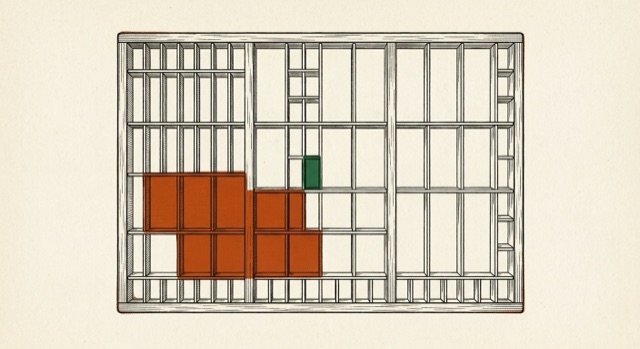
Guides repeat a launch-day tool count for Meta's official ads connector. I counted 95 — 34 of them catalog tools. The full dated list, and how to check.
34 of the connector's 95 tools are catalog and product-feed tooling — the largest group, and the one nobody covers. Plus Meta's own duplicate warning.

A free Meta ads audit in four questions instead of forty settings: wasted spend, real creative winners, creative pace, and whether your numbers are real.
It is a server-side rollout gate, not a setting you missed. Check your other ad accounts first — they are gated separately — and what to do meanwhile.
When spend climbs while new creative stays flat, performance decays weeks later and looks like an algorithm change. It isn't. The measure and the prompt.
No — and not because the tooling is weak. It reads, analyses and drafts, all paused, while you keep every decision. Here is exactly where the line sits.
An ad account can be MCP-enabled and still refuse to answer. is_queryable is a separate flag, and its reason field can come back saying only “Unknown error”.

The official connector is Meta's own sanctioned path — but that is not the same as a guarantee. Here is what actually puts an ad account at risk.
Claude will occasionally state an ad metric with total confidence that Ads Manager disagrees with. Three habits catch nearly all of it, without trust.

Almost every guide says Claude can't see your ad creatives through Meta's connector. That was true once. It isn't now — here are the tool names to check.